

What Australians Need to Know About Health Insurance Chanes in 2026
Published April 1, 2026
Have you ever opened your health insurance renewal document this year and thought to yourself, “Why has my premium gone up?” Or perhaps, have you ever thought to yourself, “What does the private health insurance changes 2026 really mean?”
Well, with the government changing the amount they will rebate, and families seeing a noticeable increase in their premium, Australians are starting to think more about what the real value of their insurance is.
Some families need to know the facts, some need to know what the impact of the policy changes means to them, and others simply want to know whether or not they can get a better deal by switching to another fund. That is what this guide will help you understand.
What’s New In The Private Health Insurance Changes
The private health insurance changes in 2026 have brought in a number of new changes to the system. The new changes are aimed at promoting more transparency in the insurance sector.
The new changes include a new tier system for insurance policies and standardization of clinical definitions. This will help consumers compare different insurance policies.
The new changes are aimed at providing value and understanding for policyholders.
1. Changes to Rebate Thresholds
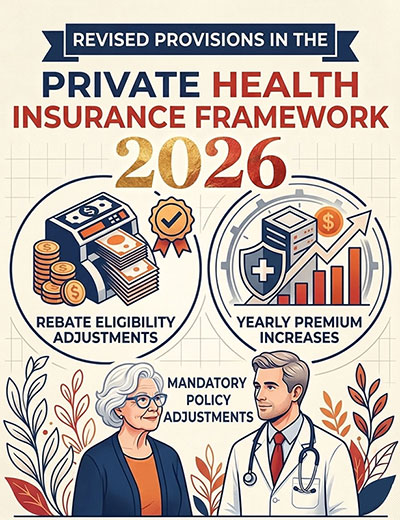
The Australian government has raised the rebate thresholds in accordance with income growth and healthcare inflation.
What Changed?
- Income levels have been raised.
- More people are eligible for a partial rebate.
- The base tier has dropped slightly to 24.28% for those under 65 from April 1, 2026.
2. Annual Premium Rise for Most Insurers
Industry-weighted average: 3.73% increase effective April 1, 2026. Bupa: 5.10%, Navy Health: 2.85%.
3. Mandatory Policy Changes Introduced in 2026
With this background, several policy changes have come into place to ensure that there is more transparency and clear categorization for consumers.
Why These Private Health Insurance Changes 2026 Matter For Australians
Larger Gaps Between Policy Tiers
The new categorization made the difference between bronze, silver, and gold policies much clearer—and more expensive. “Some families have been pushed up a tier because some benefits have shifted to a higher tier.”
Out-of-Pocket Costs Continue to Climb
Even with rebates, health care inflation led to increased personal spending.
Key Cost Drivers
Increases in hospital costs, which have risen by 9.4%, as well as fees charged by specialists, which are up by 7% with average gaps now at $210, and allied health services, which have generally increased by 3.2% heading into August 2026.
This is why many people these days are looking for ways to compare extras cover to avoid unnecessary spending.
More Flexibility in Extras Policies
The year 2026 brought a number of policy improvements, with flexibility in extras bundles being a significant change.
What Improved
- Pick-and-mix extras
- Adjustable annual limits
- Higher Roll-over allowances
| Category | 2024 Overview | 2026 Update | Impact on Consumers |
|---|---|---|---|
| Rebate Income Limits | Individuals up to $97,000; families up to $194,000 | Individuals up to $101,000; families up to $202,000 (effective July) | More people qualify for rebates, with higher income brackets included |
| Premium Adjustments | Around 3.1% average rise | Average increase of 3.73% from April | Annual costs may rise by roughly $80–$150, partially offset by rebates |
| Mental Health Cover | Available as optional add-ons | Expanded options, including counselling support and updated Medicare links | Improved access to services without requiring full policy upgrades |
| Hospital Cover Categories | Standard classifications in place | Refined and updated treatment categories | More consistent understanding of what each level of cover includes |
| High-Cost Treatments | Coverage details differed by insurer | Uniform definitions introduced across providers | Greater clarity around out-of-pocket expenses for major treatments |
Note: Information is based on publicly available government and health sources. Always check official resources for the latest updates, as policies may change.
What You Need To Do in 2026 Prior Renewing The Cover
Step 1: Check Your Effective Premium Post-Rebate
Don’t take the premium quoted on the cover. Calculate your premium post the revised rebate thresholds.
Step 2: Audit Your Benefits vs Usage
Consider downgrading your cover if your usage is low. If your kids need braces or you are planning to fall pregnant, upgrade your family health cover Australia very carefully.
Step 3: Compare Your Policy Against New 2026 Standards
This new framework has altered some of the inclusions. Thus, it is considered the best time to compare health insurance.
To conclude
Private health insurance changes 2026 brought many pricing, benefits, rebates, and policy structure changes. For many Australians, the value of their cover is no longer based on defaulting to their current policy. It is now based on making smart choices. And whenever possible, compare your extras cover to ensure you’re not paying unnecessarily. With the right strategy in place, you can protect your health and your wallet, even in the year of change. Savy consumers will understand that this is the perfect time to ensure you’re making the most out of your cover.
Stay updated on private health insurance changes 2026 Australia with Utility Market. Follow us on Instagram for the latest insights and tips.