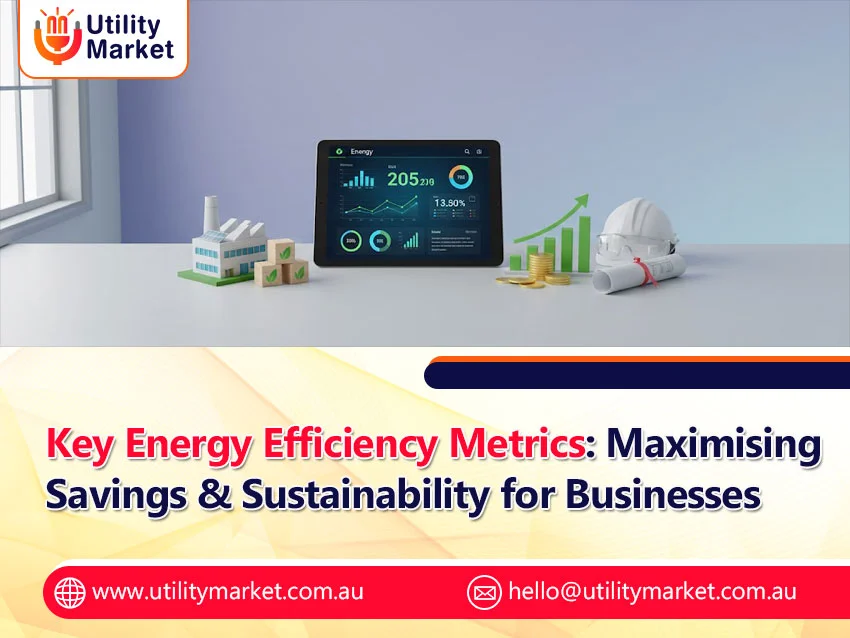
Key Energy Efficiency Metrics: Maximising Savings & Sustainability for Businesses
Published January 27, 2026
Enhancing energy efficiency is crucial for companies of all sizes in the modern world of growing energy costs and environmental concerns. Knowing important energy efficiency metrics can help you cut expenses, improve sustainability, and streamline operations whether you’re a corporate decision-maker, small business owner, or entrepreneur.
We understand how crucial energy efficiency is when it comes to generating both financial and ecological advantages. The key metrics for assessing and enhancing energy performance are examined in this guide.
1. Intensity of Energy Use (EUI)
The annual energy consumption per square metre of a building is measured by Energy Use Intensity (EUI). Higher energy efficiency is indicated by a lower EUI. Businesses can find areas for improvement, like improving insulation or streamlining heating and cooling systems, by keeping an eye on this metric. Real-time tracking is made possible by sophisticated tools like energy dashboards, which enable businesses to make proactive energy use adjustments.
2. Effectiveness of Power Usage
For IT facilities and data centres, Power Usage Effectiveness (PUE) is essential. It determines the ratio of the energy consumed by IT equipment to the overall facility energy. A lower PUE indicates that more energy is used for computing as opposed to auxiliary systems like cooling. PUE is improved by innovations like server virtualisation and sophisticated cooling solutions, which increase the energy efficiency of IT operations.
3. Consumption of Specific Energy (SEC)
Energy consumption per unit of production, such as the energy required to produce a product, is measured by Specific Energy Consumption (SEC). Industries can reduce expenses without sacrificing output by monitoring and optimising SEC. This metric is improved by techniques like process automation and predictive maintenance, which raise overall operational effectiveness.
4. Intensity of Carbon
By calculating CO2 emissions per unit of energy consumed (gCO2/kWh), carbon intensity quantifies the environmental impact of energy use. By implementing energy-efficient systems and renewable energy sources, businesses looking to lower their carbon footprint can do so. Businesses that are dedicated to sustainability frequently use carbon intensity as a standard for reaching net-zero objectives.
5. Certificates of Energy Performance (EPC)
A building’s energy efficiency is evaluated by Energy Performance Certificates (EPCs), which rank properties from A (most efficient) to G (least efficient). EPCs are mandated by law in the UK for commercial property sales and rentals. Utilising renewable energy systems, installing energy-efficient windows, and upgrading insulation can all raise EPC ratings, lower energy costs, and raise property values.
6. Factor of Load
By contrasting average consumption with peak demand, load factor assesses how consistently energy is used over time. Higher load factors indicate more consistent energy use, which lowers expenses and eases the burden on the energy grid. By integrating energy storage solutions or scheduling energy-intensive operations during off-peak hours, businesses can improve this metric.
7. Efficiency of Heat
The efficiency with which heat energy is transformed into useful work is measured by thermal efficiency. For businesses that depend on power plants, furnaces, and heating systems, this metric is crucial. Heat recovery systems and combined heat and power (CHP) systems are examples of technologies that can greatly improve thermal efficiency, which lowers waste and energy expenses.
8. Return On Investment ( ROI)
ROI calculates the financial gains from energy-saving initiatives like upgrading energy management systems or installing solar panels. A high ROI justifies upfront expenditures by indicating quicker investment payback. To assess the long-term effects of their sustainability initiatives, businesses can monitor ROI.
9. Energy Productivity
Energy productivity makes an access to the economic output per unit of energy consumed. A higher energy productivity score indicates efficient resource usage without compromising business growth.
To Conclude,
Keeping a track of the key energy efficiency enables business to optimize energy usage, lower costs and reduce environmental impact. Implementing proper strategies to improve these metrics can lead to better savings and increased sustainability. At Utility Market, we help business keep track of the difficulties of energy management with customised solutions and plans. Whether you are seeking to optimize a single facility or develop a company-wide energy strategy, our expertise guarantees measurable success.