From Power Plant To Plug- Understanding Australia’s Electricity Network
Published October 28, 2025
When you switch on a light, it’s simple to overlook the intricate path electricity has travelled to get to your house. Behind that straightforward action exists one of the biggest network systems in the world – the Australian electricity grid. This grid maintains the power flowing through five states, but it’s also under strain as the nation transitions to renewable power. Knowing how the grid operates, and why upgrading is so challenging, makes a lot of sense of much of Australia’s energy issues today.
What the NEM actually is
The majority of Australia’s electricity is distributed through something called the National Electricity Market, or NEM. In spite of the name, the NEM is not an individual power station or a single organization. It is a network that connects electricity generators, transmission lines, retailers and consumers from most of the eastern and southern regions of the nation. The NEM covers Queensland, New South Wales, Australian Capital Territory, Victoria. Western Australia operate their own independent grids that are not part of NEM. This grid permits electricity to flow between states, depending on where it’s coming from and where it’s required.
How electricity travels across the grid
Electricity does not reside in a pipeline awaiting consumption. It is produced as it is required, and it travels directly from the power stations to homes and offices through a network of transmission and distribution cables.
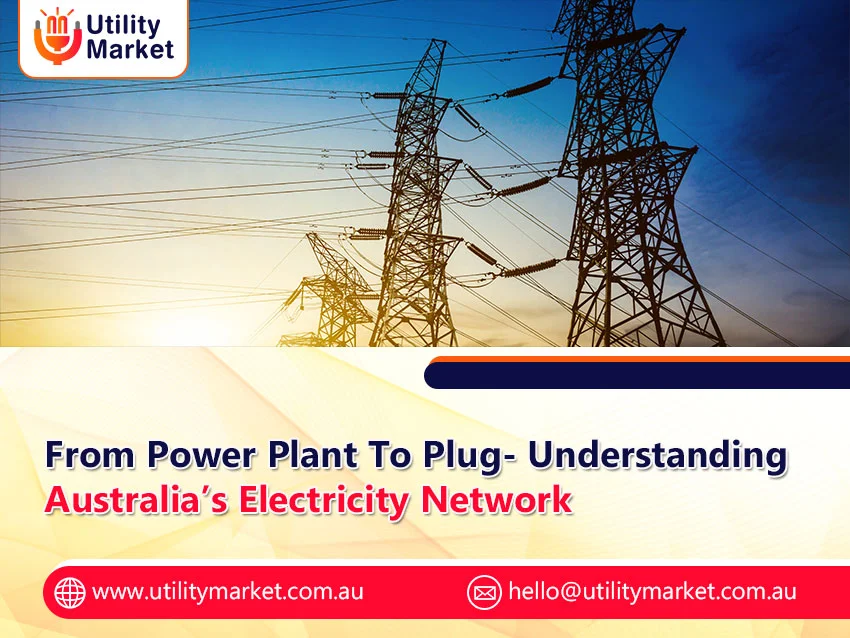
The transmission system is utilized to transport electricity over great distances. Upon arriving at towns or cities, transformers reduce the voltage so that the electricity can be distributed via smaller distribution lines to homes and buildings.
To enable this to happen across state borders, the NEM uses special transmitting lines known as interconnectors. These are the large cables that transmit electricity between states. Some are overhead, but others go underground or even underwater, such as the cable from Tasmania to Victoria.
Why state boundaries still matter
Although the NEM is a national market, each state still controls its own electricity system to some extent. Energy policy, planning, and investment decisions are frequently made at a state level. As a result, rules, priorities, and targets will differ based on where you are.
For instance, there may be one state pushing aggressively for more renewables, and another pushing for gas or new transmission lines. Those differences can cause delays or conflicts when constructing new infrastructure that traverses borders.
Why upgrades are so difficult
- Upgrading the power grid is more difficult than laying down fresh cables. Each new development takes the form of complicated planning, environmental studies, consultations with people and government approval. Most proposed upgrades span considerable distances, cross private property, or have to be coordinated among several states and agencies.
- Transmission lines are also very expensive to construct and maintain. The longer the line, the more expensive it is and for a large number of cases, the best spots for renewable energy are located many miles away from the current grid. This leaves a dilemma. New sources of power are ready to roll, but the grid is not always ready to transmit that power to where it is needed.
- Another issue is timing. A new wind or solar farm can be constructed in a matter of months, but the transmission line necessary to serve it could take years. If the two don’t coincide, clean energy is lost or delayed.
Why the grid is key to clean energy
Australia is not lacking sunshine or wind. Australia is establishing more solar and wind farms each year. But if the grid is not in place to redirect that energy, much of it will be wasted. An up-to-date electricity system needs to be quick, flexible and linked. That is, it needs secure interconnectors, efficient transmission lines, and sufficient capacity to support peaks in demand. It also requires forward planning, so the grid can match the speed of renewable energy growth.
The electricity grid is not merely a series of wires – it’s the basis of how Australia will come to power itself in the future. In order to find out how modifications in the electricity grid could affect your energy plan or bills, do feel free to get in touch with Utility Market.