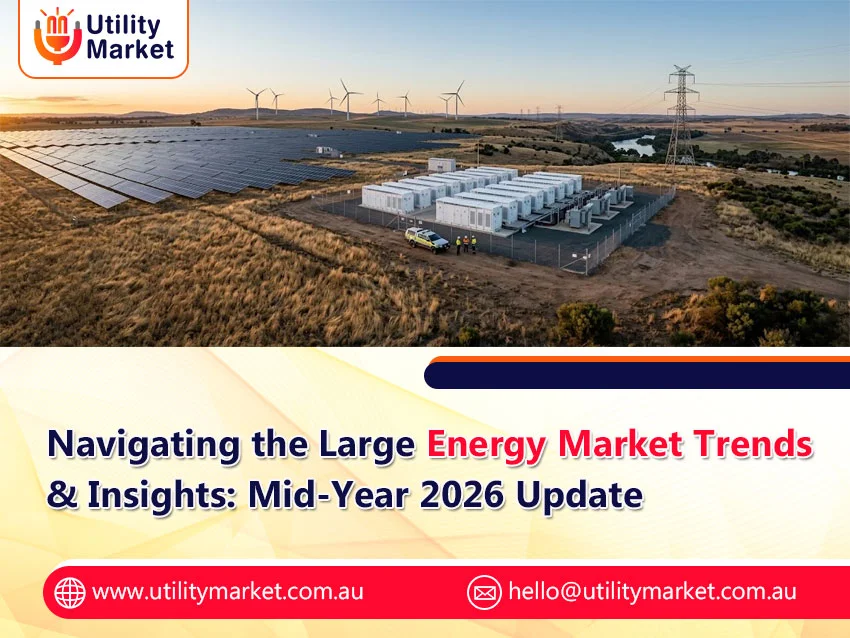
Navigating the Large Energy Market Trends & Insights: Mid-Year 2026 Update
Published June 8, 2026
The rising costs of electricity remain an issue for many people, and the new developments that are expected next month may come as a reprieve for those affected. Despite the fact that reduced price defaults and free electricity might make things easier for some, it may be beneficial to look at other offers as well.
Queensland
There has been an ongoing trend of falling wholesale electricity rates in the State of QLD which continued during April and extended into May, with forward energy markets in fiscal year 27 experiencing another fall in price due to more optimistic supply conditions. In Australia, transaction fees for property and finance for fiscal year 27 (from July 1, 2026 onwards) have decreased by 4.1% as per the consumer price index.
A primary factor behind the easing of prices is attributed to the increasing participation of renewables in electricity production together with improvements in battery storage technology, smoothing out the peak evening demand periods. Increased solar production has added to the decreased spot price during daytime hours, resulting in considerable downward pressure on average prices in comparison with those of prior years.
Although QLD has been vulnerable to volatility due to its high demand for electricity and low renewable generation, today’s market conditions have been considerably more positive than what prevailed throughout most of 2024 and early 2025. Since the current price level for wholesale contracts is below past peak periods, it might be a good time to reconsider your electricity purchasing policy. Businesses looking to secure more competitive rates may also benefit from taking the time to compare electricity plans in Queensland and assess available market options.
New South Wales
Similarly, wholesale electricity prices in NSW continued to soften through April and May, with forward market pricing showing a significant decline compared to recent quarters, indicating more favourable market conditions ahead.The increased use of renewables, as well as battery storage capacity, has meant less stress on the market during conventional evening peak times.
In addition, the high level of production from renewable facilities has been responsible for lower day time prices and wholesale prices in the market. Although there are concerns regarding aging and future supply, recent pricing developments in NSW suggest that there is relatively low risk of volatility compared to past years.
This recent decline in forward prices presents a crucial window of opportunity for customers to re-evaluate their contractual positions.
Victoria
Wholesale pricing in Victoria maintained some of the softest pricing in the National Electricity Market in both April and May, although forward pricing was not as aggressive as in some other mainland regions over the same time period. Recent lower wind and solar energy production has removed some of the downside pressures that would otherwise be expected to occur in Victoria during times where higher production is typical.
This notwithstanding, pricing has continued to soften within Victoria along with the rest of the NEM due to the continued positive effect on pricing from improved interconnector flows, market stability and batteries continuing to mitigate evening peak demand periods, meaning less reliance on higher priced firming energy.
VIC is still the cheapest mainland region for FY27 wholesale energy contracts, which means there is currently an opportunity to reassess longer term energy purchases while pricing levels remain below historical average levels.
South Australia
Although the wholesale electricity market in South Australia saw significant volatility in April and May, forward pricing has seen substantial improvement along with that in the NEM as a whole. The growing contribution of renewables in addition to battery storage in the system has made the system much more flexible, especially during evening peak times when batteries have been seen to stabilize volatility and price spikes.
On account of high levels of renewable generation, pricing in the daytime has also become subdued, with negative pricing being seen very often, thereby contributing towards lower average wholesale electricity prices.
While South Australia still sees some level of volatility when there is reduced output of renewables or issues with the interconnectors, current pricing in the wholesale electricity market in SA is quite improved from what it has been in the past few years.
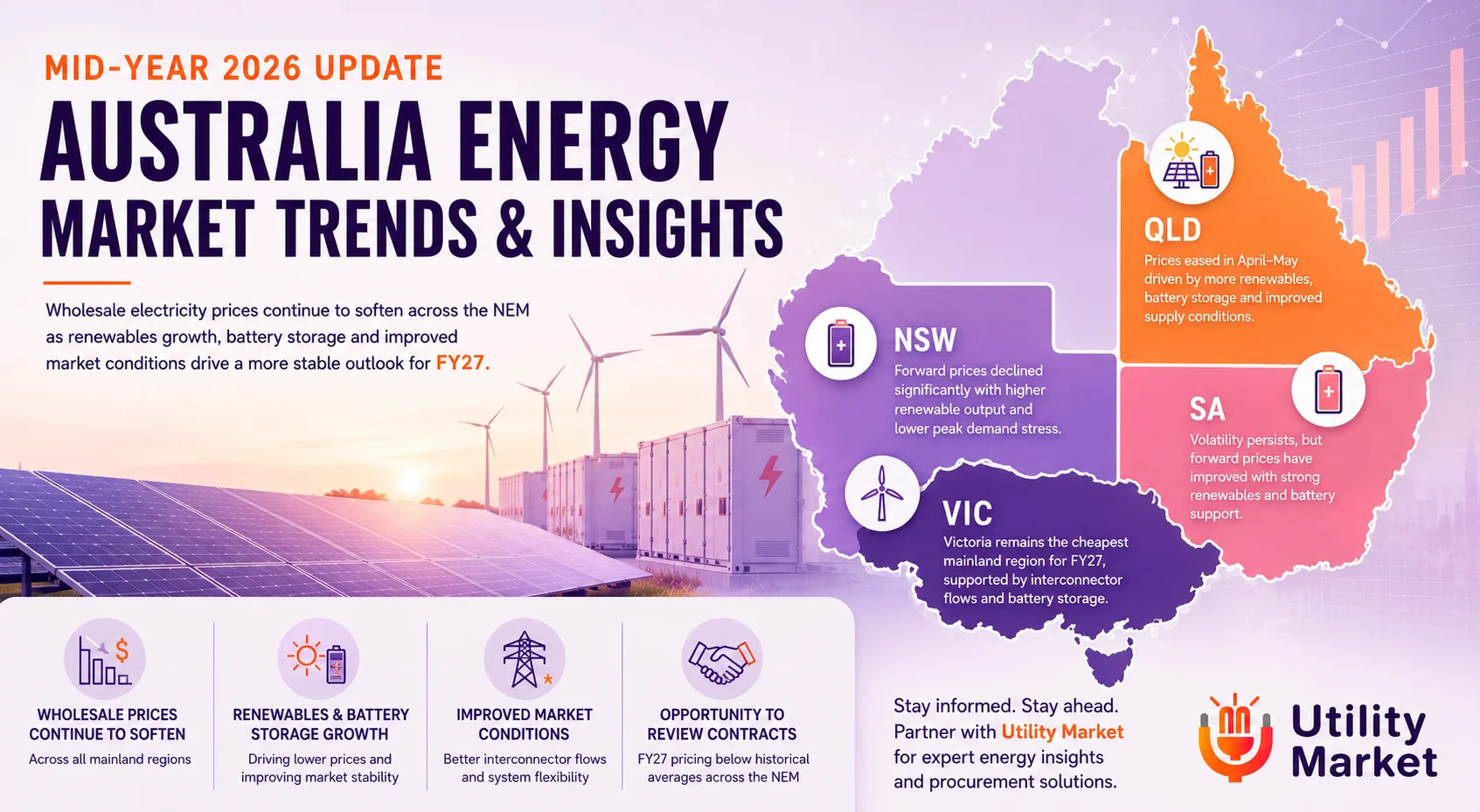
Wholesale electricity prices have generally softened due to increased renewable energy generation, expanded battery storage capacity and improved market conditions. Higher solar and wind output has helped reduce daytime prices, while batteries are increasingly supporting the grid during peak demand periods, contributing to greater overall market stability.
Current forward market pricing remains below the elevated levels experienced during much of 2024 and early 2025. While every organisation has unique energy requirements and risk considerations, the present market environment may provide an opportunity to reassess existing contracts and explore longer-term procurement options.
Although lower wind and solar output has reduced some of the downward pricing pressure typically seen in Victoria, the state continues to benefit from strong interconnector support and growing battery storage capacity. These factors help reduce reliance on higher-cost generation during peak demand periods, helping Victoria maintain some of the most competitive FY27 wholesale pricing in the National Electricity Market.
Daytime spot prices are heavily influenced by strong solar generation, which is placing downward pressure on wholesale prices during daylight hours. Forward market pricing, however, reflects expectations across all trading periods, including evening peaks, seasonal demand changes, weather conditions and generation availability. While some volatility remains, increasing battery storage capacity is helping improve market stability and reduce the severity of price spikes.
Electricity markets remain sensitive to factors such as extreme weather events, generation outages, interconnector constraints and fluctuations in renewable energy output. While current conditions are considerably more favourable than in previous years, businesses should continue to monitor market developments and maintain a proactive approach to energy procurement.
To conclude
As the energy sector continues to develop throughout 2026, keeping up to date with changes in price and market behaviour is crucial for companies that use large amounts of energy. Utility Market can assist companies to stay up to date amid all the changes happening in the energy sector.
For the latest Australia Energy Market Trends 2026 insights, follow Utility Market on LinkedIn and stay informed about wholesale energy pricing, market developments, and business energy opportunities across Australia.