How Energy-Efficient Homes Can Lower Your Energy Bills in Australia
Published August 6, 2026
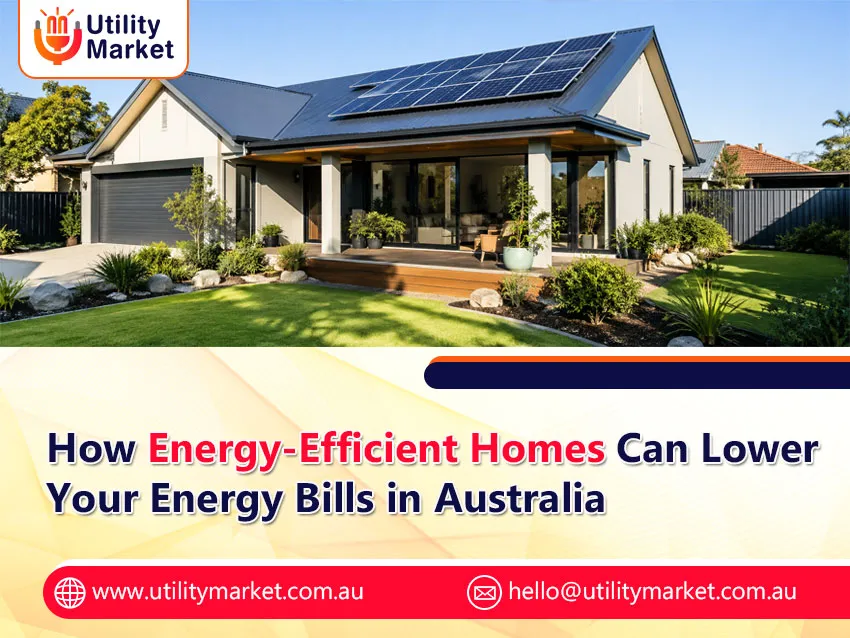
When you think about energy efficiency, the first things that likely come to mind are LED light bulbs, solar panels, and recycled timber. While these are all excellent examples of sustainable living, energy-efficient housing goes far beyond these familiar features. However, here in Australia, the discussion has gone far beyond any isolated attempt to go green. Now we’re looking at building homes that would be energy efficient, more affordable and comfortable to live in both summer and winter.
Why is there such a thing as energy-efficient homes in Australia? What does it mean for Australian residents? Let’s explore this concept in detail. Starting from the reasons to care and finishing at pros and cons of investing in an energy efficient home.
Why energy efficient homes are important in Australia
It may seem strange, but despite common associations, Australia has extremely varied climate. It can range from freezing winters in Canberra to burning hot summers in Darwin.
And here are some reasons as to why it is important:
- Electricity prices are high: With the electricity prices going up (and even more rises expected starting July 2025), energy efficient homes will help you reduce the costs of keeping the house.
- Net-zero goals: The Australian government plans to reach net-zero greenhouse gas emissions by 2050. Almost 25% of our emissions come from buildings, thus the importance of efficient homes in meeting this target.
- Well-being and comfort: Houses that have a stable indoor temperature without needing much heating and cooling not only feel better but are better for our well-being.
What characterizes an energy efficient house?
There is more to energy efficiency than just having solar panels and LED globes in the house, it is an environmentally friendly design, insulation and energy management. Whether it is a new construction or a renovation project, knowing what makes a house energy efficient can prove to be useful. So, let’s look at each one of them in more detail:
| Feature | Benefit | Potential Savings |
|---|---|---|
| Roof & Ceiling Insulation | Reduces heat loss and gain | Lower heating and cooling costs |
| Passive Solar Design | Uses natural sunlight efficiently | Less reliance on heating and cooling |
| LED Lighting | Uses less electricity | Up to 80% less energy than incandescent bulbs |
| Solar Panels | Generates electricity | Reduces grid electricity bills |
| Double-Glazed Windows | Better insulation | Improved comfort and lower energy use |
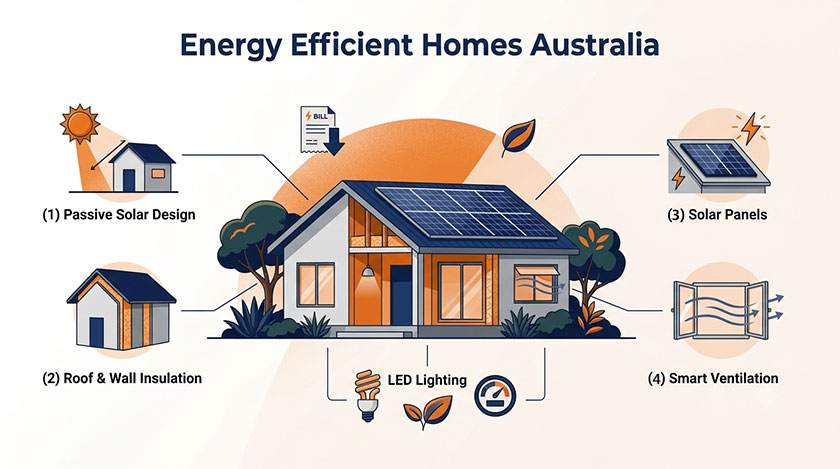
Passive Solar Design
The passive solar design is an example of good architecture that takes advantage of sunlight. Homes that are designed in accordance with passive solar principles maximize the use of sunlight in winter and shield from it during summer months. Its major components include:
- Orientation: In most climates of Australia north-facing windows capture sunlight in winter and decrease the need for heating.
- Thermal mass: Heavy materials like concrete, brick and stone collect the sunlight and radiate it gradually to keep the temperature inside constant.
- Shading: Eaves, pergolas and deciduous trees can create shading that blocks sunlight in summer but not in winter.
- Cross Ventilation: Correct placement of windows helps to ventilate the house with natural air flow especially in humid climates.
Insulation
This is perhaps one of the most useful means to increase energy efficiency in your home. Proper insulation retains heat in the house during winter and prevents its penetration in the summer, resulting in less need for heaters or air conditioners. The following areas can be insulated:
- Roof and ceiling – a source of heat gains/losses.
- Walls – a way to keep constant indoor temperature.
- Floors – especially in cold weather or when you have a raised house.
| Appliance/System | Typical Share of Energy Use |
|---|---|
| Heating & Cooling | 30–50% |
| Water Heating | 15–25% |
| Kitchen Appliances | 10–15% |
| Lighting | 5–10% |
| Electronics & Other Appliances | 15–25% |
The Bottomline
Whether you build, buy or even rent your house, energy efficiency must be your concern. Even though it costs more initially, the savings in terms of both money spent on electricity and the ecological footprint are significant. Most importantly, with constantly growing prices for energy and increasingly ambitious climate goals set by Australia, an energy-efficient house has become a necessity rather than an option. At Utility Market, we help Australians compare energy plans and find smarter ways to reduce energy bills while building a more energy-efficient home.