Is Basic Health Insurance Enough to Avoid the Medicare Levy Surcharge?
Published January 8, 2026
For most Australians, whether or not to purchase private health insurance is largely linked to their personal financial provision for themselves, their loved ones, and even for their future, such as starting to have private obstetric care so that they could finally have kids.
However, there is also a subsection of the population who receive coverage as they would not like to pay the Medicare Levy Surcharge, which is a tax component imposed on the high-income population who don’t have private hospital cover.
Although Basic health insurance may be a great way to sidestep the fee, the real question is this: Is purchasing Basic health insurance solely for the purpose of avoiding the MLS surcharge a financially savvy move or could it ultimately cost you down the line?
What is Medicare Levy Surcharge (MLS)?
Essentially, this is a tax that is charged to Australians who have an income higher than a certain threshold yet do not have private hospital coverage. The intent behind the establishment of the MLS is to promote higher-income earners to purchase private health insurance.
For the 2026-27 financial year, the MLS affects singles earning above $101,000 per year and couples or families earning above $202,000 per year.
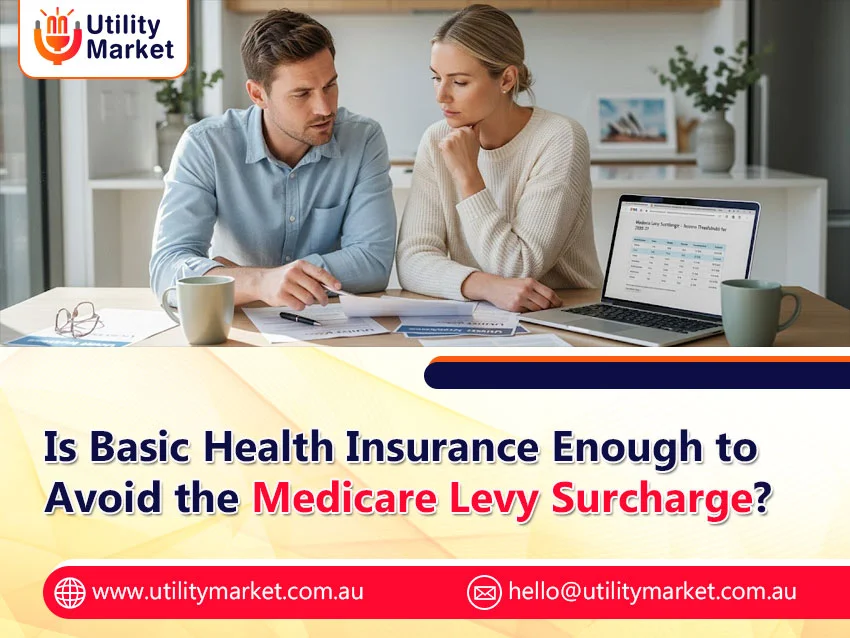
This is also computed as a percentage of income, and the more income one has, the higher the rate. You are also free to consult the income level table below:
The problem of Basic health insurance
While Basic hospital cover will help you dodge the Medicare levy surcharge, it is most likely not what you have in mind when you imagine comprehensive health cover. In fact, Basic health insurance policies are very limited in what they do cover. Here’s why:
- Minimal protection:Many Basic policies only include ambulance cover and a few restricted (but essential) services, meaning they give you very little bang for your buck, especially if you actually need hospital care. Some of the services might come up with partial coverage, which leaves you head to toe most of the bill.
- You don’t always need ambulance cover:If you are residing in Queensland or Tasmania, then ambulance services are already covered by your state government. That means paying for a policy that mainly covers you for ambulance costs isn’t going to be of any real value.
- Cost vs cover:A new article in the Sydney Morning Herald showed that someone earning only 30 with an income of less than $93,000 a year in Australia would have to pay approximately $78 per month for a Basic plan with an excess of $750 in 2023. But you could have obtained much better coverage with even slightly higher plans.
Avoiding Extra Charges: Understanding MLS and LHC Loadings
If you happen to be amongst those Aussies who earn above the MLS threshold, private health insurance will indeed help you avoid paying this surcharge. However, there is more to these penalties. Another important reason why you might consider private health insurance before reaching the age of 31 is related to Lifetime Health Cover loading.
LHC loading is an extra premium cost that will be included in your health insurance when you don’t have hospital coverage by the age of 31. Each year beyond this age without hospital coverage means an increase of 2% extra premiums up to a 70% cap. For instance, when you take up the coverage at the age of 40, this means you’ll have to pay 20% extra premiums for at least 10 years. The extra premium costs will end after 10 continuous years of coverage; however, the costs of delaying are enormous.
Though it is true that avoiding these fees is amongst the reasons some persons choose to have a Basic hospital plan, as we have seen, contributing a bit more is well worth it in some cases.
Conclusion
In the nutshell, personal health care insurance is more than just paying less to avoid a payment. You want it to give you comfort as well when you need it most. At Utility Market, we can help you strike a balance between affordability as well as the best possible cover. Contact Utility Market today to learn more about your personal health care insurance.