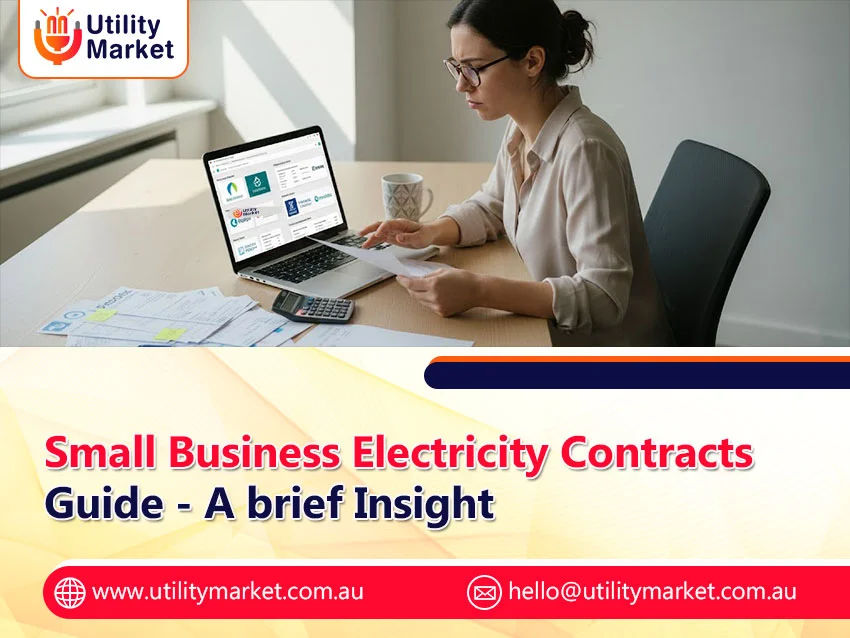
Small Business Electricity Contracts Guide – A brief Insight
Published December 2, 2025
Getting the best business electricity contract and the support you need can be challenging, especially when you are navigating Small Business Electricity Contracts as an SME. Unlike large corporate organisations, you may not have a dedicated team member, specialising in energy procurement and hence choosing the wrong plan could impact your bottom line.
What’s the difference between small business and commercial electricity contracts?
Small business electricity contracts are generally taken up by small to medium-sized businesses. They’re characterised by their flexibility and the standard peak and off-peak price structure. They normally contain no exit fees, which enables customers to switch at will and move with ease onto a cheaper alternative.
Although the price can be competitive, the rates in a small business contract are typically bundled, except for the supply charges and solar export. This means that all charges like usage, network charges, and environmental charges are wrapped into one price with zero visibility over individual costs.
Could switching lead to extra or unforeseen costs?
Not every business can, or should, migrate from a small business contract to C&I. Sometimes, moving onto C&I rates may lead to changes in network tariffs, which may have considerable cost implications. Reverting back to a small business contract once you have been classified as a C&I can be an arduous process, which may also be quite complicated and time-consuming hence, it is necessary to weigh the pros and cons with the help of an energy specialist.
Owning a small business includes keeping a close tap on every expense, mainly electricity. Wise a rise in operational costs and energy consumption, making the right choice of electricity can impact your bottom line remarkably. The good news? Grabbing the best electricity deal isn’t complicated when you know what to look for. Here’s a practical step-by-step guide to help small business make smarter & cost-effective decisions.
1. Understand Your Actual Energy Usage
Before you begin comparing providers or negotiating contracts, start with your energy use. Review your past 6–12 electricity bills and highlight the following:
Peak usage times
- Average monthly consumption
- Seasonal fluctuations
Examples of small businesses are cafes, retail stores, salons, and offices, which usually have predictable patterns. Knowing your usage helps you choose a plan that matches your needs-whether that’s peak/off-peak pricing, flat-rate billing, or flexible contracts.
2. Compare Several Electricity Suppliers
Make sure you don’t accept the first offer. Energy markets are pretty competitive and service providers are developing new plans, suitable for SMEs.
When comparing, consider:
- Price per kWh (peak, off-peak, and shoulder)
- Demand charges
- Daily supply charges
- Discount structures
3. Improve energy efficiency to reduce your costs
Getting a good deal on electricity is only half the equation. The biggest savings come when overall usage is reduced.
Practical energy-saving steps include:
- Moving to LED lighting
- Utilizing energy-efficient air-conditioning units
- Installation of timers or motion sensors for lighting
- Old appliances upgradation
- Regular maintenance of refrigeration or HVAC systems
- Use of smart power strips to eradicate standby power
4. Choose the Right Tariff Type
Electricity schemes are not one-size-fits-all; the right tariff slashes your bills.
Fixed-Rate Tariff: A tariff ideal for those who want cost stability. Prices are locked for the contract period.
Variable-Rate Tariff: Prices fluctuate with the market. You can save during low-rate periods but may pay more if rates rise.
Time-of-Use Tariff: Ideal for the business that is able to operate during off-peak hours. Savings will be substantial if your machinery or appliances can run during these times.
Demand Tariff: Suited for businesses with heavy electrical equipment.
5. Revisit Your Plan Annually
Electricity markets change quite frequently. A plan that works out best these days may not still be the best next year. So, ensure you create a reminder in order to compare your plan annually and switch if there are better available options.
To summarize,
For small or medium business in Australia, gaining the best deal in electricity comes down to understanding your usage, comparing service providers, selecting the right tariff, and negotiating smart. Combine this with efficient energy habits, and you will go a long way toward not just cutting costs but building a more sustainable, future-ready business.
Keep up with fresh trends, expert tips, and essential updates on Small Business Electricity Contracts by following Utility Market on LinkedIn.